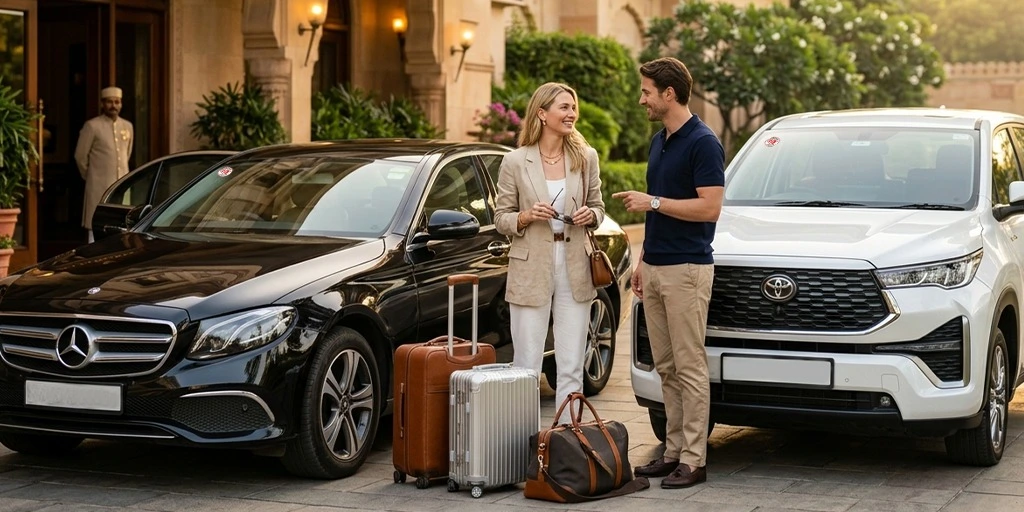
Travelling across India can be very different from travelling in many Western countries. Distances between places are often longer than expected. Traffic patterns vary from city to city. For families or travellers with packed schedules, relying entirely on public transport may not always be practical.
Because of this, many international tourists prefer renting a car during their stay. It gives them more flexibility, better comfort and the freedom to travel according to their own plans.
At the same time, first-time visitors and NRIs returning after several years often have similar concerns before booking. Common questions include:
- What documents arerequiredto rent a car in India?
- Areforeign driving licences accepted?
- What are the road conditions like in different cities and regions?
- Which rentaloptionis best suited to their travel plans?
Understanding these details beforehand makes the overall travel experience far smoother.
Can Foreign Tourists Rent Cars in India?
Yes, international tourists can legally rent cars in India. Most established car rental companies regularly work with overseas visitors, NRIs, business travellers and holiday travellers arriving from abroad.
The process itself is usually simple, particularly when bookings are made through organised rental providers. Visitors can choose from short-term city rentals, long-distance travel arrangements, airport transfers or vehicles for extended family trips.
Rental services are widely available in cities such as Mumbai, Delhi, Bengalore, Hyderabad and Chennai.
What Documents Are Usually Required?
The paperwork depends on the type of booking and the car rental provider, but international travellers are generally asked to submit a few standard documents.
These commonly include:
- A valid passport
- Visa or OCI details
- A driving licence from the traveller’s home country
- Hotel or local stay information
Some companies may also request an International Driving Permit, particularly if the traveller plans to drive personally during the trip.
Keeping digital copies of important documents on the phone is always helpful, especially while travelling between cities.
Is an International Driving Permit Necessary?
For many travellers, this is one of the first questions that comes up before arriving in India.
An International Driving Permit is strongly recommended if the traveller intends to drive during the visit. Several rental providers prefer it because it helps simplify verification and reduces confusion regarding licence formats from different countries.
Even when a foreign licence is valid, carrying an IDP alongside it usually makes the process smoother.
Travellers should ideally arrange this before leaving their home country.
What Is Driving in India Like for International Visitors?
Road conditions in India can be significantly different from what many tourists are accustomed to elsewhere.
India follows left-hand traffic, which means vehicles are right-hand drive and the driver’s seat is positioned on the right side. For visitors from countries where people drive on the right side of the road, adjusting to this difference can take some time.
Roads in major cities like Mumbai and Delhi are congested for most of the day. Traffic can move quickly, lane discipline can vary and navigating during peak hours typically needs patience.
For visitors from countries with quieter roads and more controlled traffic systems, the adjustment can take some time.
Parking can sometimes be challenging in congested commercial locations, especially during the evenings and weekends.
This is why many visitors prefer to arrange transportation in a way that minimises the stress of navigating unfamiliar roads throughout the journey.
Choosing the Right Vehicle for Your Trip
The type of car travellers choose usually depends on how they plan to move around during their stay.
Smaller hatchbacks work well for short city travel and solo trips. Sedans are commonly chosen for business visits and small families because they offer better comfort for longer drives.
SUVs are often preferred for outstation journeys, larger groups or travellers carrying additional luggage. Luxury vehicles are also available for weddings, corporate events and premium travel requirements.
For family holidays or group travel, larger vehicles such as vans and tempo travellers are commonly booked because they offer more seating space and luggage capacity.
Booking the right vehicle often makes a noticeable difference during longer journeys.
Can Rental Cars Be Used for Outstation Travel?
Yes, many rental providers allow intercity and long-distance travel across India.
This is especially useful for NRIs and international tourists visiting multiple locations during one trip. Family visits, weddings, religious travel and sightseeing plans often involve travelling between cities rather than staying in one place.
Popular travel routes include:
- Mumbai to Pune
- Delhi to Agra
- Bengaluru to Mysuru
Travellers planning long road journeys should always confirm state permits, toll charges and distance policies before the trip begins.
Is Renting a Car in India Safe?
International tourists are usually safe when renting a car from a reliable car rental company.
Most managed rental companies will keep their vehicles in good condition and offer customer support throughout the rental period. But travellers should still take some precautions before booking a reservation.
Reading the latest reviews, understanding the pricing clearly and knowing what’s included in the booking can help to avoid any confusion later. The vehicle condition should also be checked before starting the journey.
Many tourists also prefer to book through companies with clear customer support, transparent billing and not always at the lowest price.
How Much Does Car Rental Usually Cost?
Many factors influence the car rental prices in India such as the city, duration of the trip, type of vehicle and peak season demand.
Compact cars are usually cheaper and SUVs and luxury cars naturally cost more. When there’s a higher demand for travel, like during festivals, holidays and wedding seasons, pricing could also go up.
Travellers should also check if parking fees, tolls, state taxes and fuel costs are included in the quotation or billed separately later.
It’s important to understand the full pricing structure before booking to avoid any unexpected costs on your trip.
A Few Helpful Tips Before Booking
Travellers visiting India after a long time sometimes underestimate how tiring local travel can become, especially after international flights or packed schedules.
Typically, planning transport in advance makes the trip easier overall.
If you are travelling at peak times, it is often advised to book early, as vehicle availability fills quickly. For longer journeys, it is also important to choose a car for comfort and luggage space rather than just appearance.
It’s also good to keep travel plans flexible, as traffic conditions in Indian cities can sometimes affect timings.
Such small preparations can make travelling across India feel a lot more comfortable and organised.
Final Thoughts
If you are an international tourist or an NRI, renting a car in India can make your travelling much easier, particularly when you are visiting family, going to events or travelling between multiple cities.
The experience is much smoother if travellers are aware of the process beforehand and choose arrangements that are within their timeframe and comfort zone.
When planned well and with a reliable rental partner, travelling across India is not just less stressful, but much more enjoyable.
If you are looking for trusted car rental service in India, be sure to check out Autoriders.