Autoriders

Author name: aman singh

Blog

Best Road Trips from Mumbai: Routes, Stops, Fuel Costs & Travel Guide 

There is something deeply satisfying about leaving Mumbai before sunrise. The city is still waking up. The roads are quieter than usual. And somewhere after Thane, once the skyline slowly gives way to hills, highways, forests or the sea, you realise why road trips remain one of the best ways to travel across Maharashtra and the western coast of India.  The beauty of Mumbai is that you are never too far away from a completely different landscape. Within a few hours, you can be driving through misty mountains in Lonavala, vineyards in Nashik, coastal roads near Alibaug or Portuguese-style seaside towns in Daman and Diu.  Some trips are perfect for a spontaneous weekend. Some deserve a long four-day escape. Some are meant for driving enthusiasts. Others are better enjoyed from the back seat with music playing and someone else handling the wheel.  So, if you are planning your next getaway, here’s a detailed guide to some of the best road trips from Mumbai, complete with routes, travel time, fuel costs, places to visit and a few practical travel tips along the way.  Mumbai to Lonavala & Pune  The Classic Western Ghats Drive  Few road trips are as iconic as the Mumbai–Pune route. It is the drive many Mumbaikars take for their very first road trip. And somehow, even after doing it multiple times, the charm never really fades. The winding ghats, sudden valleys, roadside chai during monsoon and the first glimpse of mist-covered hills near Lonavala still feel special.  Distance & Travel Time  Mumbai to Lonavala: Around 85–95 km  Mumbai to Pune: Around 145–155km  Travel Time:  Lonavala: 2 to 3 hours  Pune: 3.5 to 5 hours, depending on traffic  Which Route Should You Take?  If you are heading only till Lonavala, the traditional Mumbai–Pune Expressway remains the best route. The drive is smooth, scenic and especially beautiful during the monsoon when the hills turn intensely green.  However, if your destination is Pune city, you can now benefit from the new Missing Link project on the Mumbai–Pune Expressway once operational in phases. The upgraded alignment is designed to reduce travel time and improve traffic flow toward Pune. It is expected to make long weekend travel significantly easier in the coming years.  For Lonavala travellers, the original expressway route still makes the most sense because many popular stops lie along the older stretch.  Approximate Fuel Cost  For a petrol car with average mileage:  Mumbai to Lonavala: ₹900 to ₹1,400 one way  Mumbai to Pune: ₹1,500 to ₹2,500 one way  This can vary depending on the vehicle, driving style and traffic.  Places Worth Stopping At  In Lonavala  Tiger Point : Famous for valley views and roadside snacks.  Bhushi Dam : Best visited during the monsoon, though weekends can get crowded.  Karla Caves : Ancient Buddhist rock-cut caves with remarkable architecture.  Rajmachi Fort : Ideal for trekking enthusiasts.  In Pune  Shaniwar Wada : A landmark deeply connected with Maratha history.  Aga Khan Palace : Important both architecturally and historically.  Sinhagad Fort : Excellent for a sunrise or sunset drive.  Best Time to Visit  Monsoon for scenery  Winter for comfortable driving and sightseeing  Mumbai to Igatpuri & Nashik  Vineyards, Mountains & the Samruddhi Mahamarg Experience  If the Mumbai–Pune route feels energetic and lively, the drive toward Nashik feels calmer and more expansive. The journey slowly transitions from urban chaos to wide highways, mountain ranges, vineyards and quieter towns.  And now, thanks to the Hindu Hridaysamrat Balasaheb Thackeray Maharashtra Samruddhi Mahamarg, the drive has become dramatically smoother for many travellers heading toward Nashik and beyond.  Distance & Travel Time  Mumbai to Igatpuri: Around 130-140km  Mumbai to Nashik: Around 165–180 km  Travel Time:  Igatpuri: 2.5 to 3.5 hours  Nashik: 3.5 to 5 hours  Route Overview  You can take:  The traditional Mumbai–Nashik Highway (NH160)  Or access portions connected via the Samruddhi Mahamarg, depending on your route planning  The Samruddhi corridor has significantly improved long-distance connectivity within Maharashtra. The roads are smoother, driving fatigue is lower and overall travel feels far more efficient.  For people who genuinely enjoy driving, this stretch is immensely satisfying.  Approximate Fuel Cost  Mumbai to Igatpuri: ₹1,200 to ₹1,700 one way  Mumbai to Nashik: ₹1,700 to ₹2,700 one way  Places Worth Visiting  In Igatpuri  Bhatsa River Valley : Particularly beautiful during the monsoon.  Camel Valley : One of the most scenic valley viewpoints nearby.  Tringalwadi Fort : Ideal for short treks and panoramic views.  In Nashik  Sula Vineyards : Perhaps the most popular vineyard destination in India.  Trimbakeshwar Temple : One of the twelve Jyotirlingas.  Pandavleni Caves : Ancient caves overlooking the city.  Best Time to Visit  Monsoon for lush green landscapes  Winter for vineyards and comfortable weather  Mumbai to Alibaug  The Perfect Quick Coastal Escape  Sometimes you do not want a long drive. You simply want to leave Mumbai behind for a day or two, sit near the sea, eat good seafood and slow down.  That is exactly what Alibaug offers. And one of the best things about this trip is that you have two completely different ways to get there.  Option 1: Drive to Alibaug  Distance & Travel Time  Around 95–105 km  Approximately 3 to 4 hours, depending on traffic  The road journey takes you through Panvel and Pen before reaching the coastal belt.  It is a relatively easy drive, especially for weekend travellers who prefer flexibility.  Option 2: Take the M2M Ferry  Many travellers now prefer taking the ferry from Mumbai to Mandwa using M2M Ferries.  You can:  Carry your own car on board  Or travel as a passenger and rent locally  The ferry experience itself becomes part of the trip. Sailing out of Mumbai Harbour while the city skyline slowly disappears behind you feels surprisingly refreshing.  Once you reach Mandwa, Alibaug is a short drive away.  Approximate Fuel Cost  If driving entirely by road:  ₹1,000 to ₹1,800 one way  Ferry pricing varies depending on whether you take a vehicle on board.  Places Worth Visiting  Kolaba Fort : Accessible during low tide.  Varsoli Beach : Cleaner and quieter than the main beach.  Kihim Beach : Known for greenery and peaceful surroundings.  Murud-Janjira Fort : A little further away, but absolutely worth the detour.  Best Time to Visit  Winter and early summer  Monsoon, if you enjoy coastal rain drives  Mumbai to Daman & Diu  Long Coastal Roads & Old Portuguese Charm  This trip feels very different from the others on this list. It is longer, slower and more atmospheric.  The drive toward Daman and Diu is

Blog

Car Rental for International Tourists in India 

Travelling across India can be very different from travelling in many Western countries. Distances between places are often longer than expected. Traffic patterns vary from city to city. For families or travellers with packed schedules, relying entirely on public transport may not always be practical.  Because of this, many international tourists prefer renting a car during their stay. It gives them more flexibility, better comfort and the freedom to travel according to their own plans.  At the same time, first-time visitors and NRIs returning after several years often have similar concerns before booking. Common questions include:  What documents arerequiredto rent a car in India?  Areforeign driving licences accepted?  What are the road conditions like in different cities and regions? Which rentaloptionis best suited to their travel plans?  Understanding these details beforehand makes the overall travel experience far smoother.  Can Foreign Tourists Rent Cars in India?  Yes, international tourists can legally rent cars in India. Most established car rental companies regularly work with overseas visitors, NRIs, business travellers and holiday travellers arriving from abroad.  The process itself is usually simple, particularly when bookings are made through organised rental providers. Visitors can choose from short-term city rentals, long-distance travel arrangements, airport transfers or vehicles for extended family trips.  Rental services are widely available in cities such as Mumbai, Delhi, Bengalore, Hyderabad and Chennai.  What Documents Are Usually Required?  The paperwork depends on the type of booking and the car rental provider, but international travellers are generally asked to submit a few standard documents.  These commonly include:  A valid passport  Visa or OCI details  A driving licence from the traveller’s home country  Hotel or local stay information  Some companies may also request an International Driving Permit, particularly if the traveller plans to drive personally during the trip.  Keeping digital copies of important documents on the phone is always helpful, especially while travelling between cities.  Is an International Driving Permit Necessary?  For many travellers, this is one of the first questions that comes up before arriving in India.  An International Driving Permit is strongly recommended if the traveller intends to drive during the visit. Several rental providers prefer it because it helps simplify verification and reduces confusion regarding licence formats from different countries.  Even when a foreign licence is valid, carrying an IDP alongside it usually makes the process smoother.  Travellers should ideally arrange this before leaving their home country.  What Is Driving in India Like for International Visitors?  Road conditions in India can be significantly different from what many tourists are accustomed to elsewhere.  India follows left-hand traffic, which means vehicles are right-hand drive and the driver’s seat is positioned on the right side. For visitors from countries where people drive on the right side of the road, adjusting to this difference can take some time.  Roads in major cities like Mumbai and Delhi are congested for most of the day. Traffic can move quickly, lane discipline can vary and navigating during peak hours typically needs patience.  For visitors from countries with quieter roads and more controlled traffic systems, the adjustment can take some time.  Parking can sometimes be challenging in congested commercial locations, especially during the evenings and weekends.  This is why many visitors prefer to arrange transportation in a way that minimises the stress of navigating unfamiliar roads throughout the journey.  Choosing the Right Vehicle for Your Trip  The type of car travellers choose usually depends on how they plan to move around during their stay.  Smaller hatchbacks work well for short city travel and solo trips. Sedans are commonly chosen for business visits and small families because they offer better comfort for longer drives.  SUVs are often preferred for outstation journeys, larger groups or travellers carrying additional luggage. Luxury vehicles are also available for weddings, corporate events and premium travel requirements.  For family holidays or group travel, larger vehicles such as vans and tempo travellers are commonly booked because they offer more seating space and luggage capacity.  Booking the right vehicle often makes a noticeable difference during longer journeys.  Can Rental Cars Be Used for Outstation Travel?  Yes, many rental providers allow intercity and long-distance travel across India.  This is especially useful for NRIs and international tourists visiting multiple locations during one trip. Family visits, weddings, religious travel and sightseeing plans often involve travelling between cities rather than staying in one place.  Popular travel routes include:  Mumbai to Pune  Delhi to Agra  Bengaluru to Mysuru  Travellers planning long road journeys should always confirm state permits, toll charges and distance policies before the trip begins.  Is Renting a Car in India Safe?  International tourists are usually safe when renting a car from a reliable car rental company.  Most managed rental companies will keep their vehicles in good condition and offer customer support throughout the rental period. But travellers should still take some precautions before booking a reservation.  Reading the latest reviews, understanding the pricing clearly and knowing what’s included in the booking can help to avoid any confusion later. The vehicle condition should also be checked before starting the journey.  Many tourists also prefer to book through companies with clear customer support, transparent billing and not always at the lowest price.  How Much Does Car Rental Usually Cost?  Many factors influence the car rental prices in India such as the city, duration of the trip, type of vehicle and peak season demand.  Compact cars are usually cheaper and SUVs and luxury cars naturally cost more. When there’s a higher demand for travel, like during festivals, holidays and wedding seasons, pricing could also go up.  Travellers should also check if parking fees, tolls, state taxes and fuel costs are included in the quotation or billed separately later.  It’s important to understand the full pricing structure before booking to avoid any unexpected costs on your trip.  A Few Helpful Tips Before Booking  Travellers visiting India after a long time sometimes underestimate how tiring local travel can become, especially after international flights or packed schedules.  Typically, planning transport in advance makes the trip easier overall.  If you are travelling at peak times, it is often advised to book early, as vehicle availability fills quickly. For longer journeys, it is also important to choose a car for comfort and luggage space rather than just appearance.  It’s also good to keep travel plans flexible, as traffic conditions in Indian cities can sometimes affect timings.  Such small preparations can make travelling across India feel a lot more comfortable and organised.  Final Thoughts  If you are an international tourist or an NRI, renting a car

Blog

Self-Drive Car Rules in India: Documents and Laws 

Self-drive cars have quietly reshaped how people travel across India. What once required planning around drivers and fixed schedules can now be decided on the same day. Whether it is a short city run or a long weekend drive, the appeal lies in control and convenience.  That said, the ease of booking often hides the legal structure behind it. A self-drive car operates within a defined framework of licences, permits, insurance rules and contractual obligations. Many travellers only become aware of these when something goes wrong.  A clear understanding of the rules allows the experience to remain simple. It also protects drivers from avoidable penalties and disputes.  What Defines a Self-Drive Car in India?  A self-drive car is a rental vehicle that the customer drives personally, without a chauffeur. These vehicles are owned or managed by companies authorised to offer them for hire under specific transport regulations.  They differ from privately owned cars in both their registration and usage. One visible distinction is the number plate. Self-drive rental vehicles typically carry black plates with yellow lettering, indicating commercial usage permitted for self-drive purposes.  This classification matters. It ensures that the vehicle is legally approved for rental use and properly covered under commercial insurance policies. Using a privately registered vehicle for such services can lead to complications, especially during checks or claims.  Essential Documents You Must Carry  Documentation is at the centre of self-drive travel. Without the correct papers, even a short trip can turn into a legal issue.  Driving Licence  A valid driving licence is non-negotiable. It must authorise the driver to operate the category of vehicle being rented and should not be expired.  Rental companies usually expect the licence to have been held for a minimum period, often around one year. This is less about law and more about reducing risk.  Drivers should carry the licence at all times during the trip. A digital copy stored in an approved app is generally accepted, provided it is clearly verifiable.  For international visitors, an International Driving Permit may be required alongside the original licence, depending on the issuing country and company policy.  Identity Verification  Most operators will ask for identity proof before confirming a booking. This step is part of their internal compliance and safety checks.  Documents such as Aadhaar, passport, PAN card or voter ID are commonly accepted. In some cases, additional address proof may be requested if the primary document does not reflect the current residence.  The process is often digital, but accuracy matters. Blurred uploads or mismatched details can delay or even cancel a booking.  Rental Agreement and Booking Details  The rental agreement is where the practical terms of the trip are defined. It sets out the duration, kilometre limits, fuel expectations and the financial responsibilities of the driver.  It is easy to treat this as routine, but it deserves attention. Details around late returns, cleaning charges or damage liability are usually mentioned here and they directly affect the final cost.  Keeping a copy of the agreement, either printed or accessible on a phone, is useful throughout the trip.  Vehicle Documents to Check Before Driving  While the driver is responsible for following the law, the vehicle must also meet legal requirements. Rental companies are expected to provide valid and up-to-date documents.  Before leaving the pickup location, it is worth checking:  Registration Certificate (RC)  Insurance certificate  Pollution Under Control certificate (PUC)  Any permits required for operation  A brief inspection of the car is equally important. Noting existing scratches or dents, ideally with photos, creates clarity at the time of return. It removes ambiguity and protects both sides.  Age and Eligibility Requirements  Indian law allows individuals aged 18 or above to drive motor vehicles, subject to holding a valid licence. However, rental companies often apply stricter criteria.  Many require drivers to be at least 21 years old. Some also look at driving history or impose higher age limits for premium vehicles.  Insurance considerations and operational risk shape these conditions. They are part of the agreement rather than the law itself, but they carry equal importance for the booking to proceed.  Understanding Insurance and Liability  Insurance in self-drive rentals is often misunderstood. While the vehicle is insured, the coverage may not extend to every situation in full.  Most rentals include basic motor insurance. However, the agreement may specify a damage liability amount that the customer must bear in case of an incident.  It is important to understand:  What the insurance covers  What remains the driver’s responsibility  How accidents should be reported  Whether roadside assistance is included  In case of an accident, prompt communication with the operator is essential. Delays can complicate claims or increase financial exposure.  Driving under the influence of alcohol or violating major traffic laws can also invalidate insurance protection, leaving the driver fully liable.  Traffic Laws Apply Without Exception  Every rule that applies to a privately owned vehicle also applies to a rental vehicle.  This includes wearing seat belts, respecting speed limits, avoiding phone use while driving and following signals and lane discipline.  Traffic enforcement has become more technology-driven in many cities. Cameras record violations and fines are issued electronically. These are typically linked to the vehicle and passed on to the customer responsible during the rental period.  Ignoring such penalties can create complications in future bookings or legal records.  Interstate Travel Considerations  Self-drive cars are often chosen for longer journeys that cross state boundaries. While this is generally allowed, it is not always unrestricted.  Rental companies may limit travel to certain regions or require prior notification for interstate trips. There may also be additional tolls or entry charges depending on the route.  Before setting out, it helps to confirm:  Whether interstate travel is permitted  Any regional restrictions  Toll payment arrangements  Support availability outside the home city  This ensures that the journey remains uninterrupted.  Common Mistakes to Avoid When Renting a Self-Drive Car  Most issues with self-drive rentals arise from small oversights rather than serious violations.  Drivers may forget to check documents, assume another person can drive without being registered or overlook fuel policies. Some return vehicles late without realising the impact on billing. Others fail to report minor damage promptly.  Each of these situations can lead to avoidable charges or disputes. A few minutes of attention at the start can prevent them entirely.  Driving with Responsibility  You can’t beat the independence of travelling by yourself.

Blog

Electric Car Rental in India: EV Guide and Benefits

The Indian connection with cars is evolving. For decades, people moved through towns and roads in fuel and diesel vehicles. Today, electric automobiles are slowly creeping into the picture. They are popping up outside offices, in residential areas, at charging stations and on roadways that once looked as if they were solely reliant on fuel-powered transit. The push for EVs is for a variety of reasons. Rising fuel prices, increased environmental awareness and better electric vehicle technology have all changed people’s mindset about mobility. Travellers are focusing more on efficiency, sustainability and the overall quality of the journey itself. The Indian ecosystem is undergoing changes and electric car rental services are coming up. For many, renting an EV offers an accessible way to try out electric transportation without the commitment of ownership. Visitors can experience a cleaner and more refined way of driving firsthand. They can also learn how EVs seamlessly integrate into everyday life. What is an Electric Car?  An electric car is powered by electricity from rechargeable batteries rather than a typical internal combustion engine. The car is powered by battery systems and not by gas or diesel. It is designed for economical driving in and between cities. One of the first things people notice inside an EV is silence. The cabin is more peaceful. The acceleration is smooth, not mechanical. Driving on busy roads is more relaxing because the driving experience is more refined. Electric cars also work differently under the hood. They often require less frequent maintenance than traditional cars since they have fewer moving mechanical parts. It’s this engineering breakthrough, among other things, that is helping EVs take a prominent role in the future automotive environment. Why Electric Vehicles Are Gaining Popularity in India The rise of EVs in India reflects a broader change in how mobility is evolving across the country. Growing Environmental Awareness Air pollution is a big problem in many Indian cities. Urban areas are already crowded and the increasing traffic density and fuel use have placed an extra demand on them. Electric vehicles have no exhaust emissions and are part of the solution. It’s a big start in the right direction to reduce the pollution levels in densely populated places, even though EVs alone can’t solve all the environmental issues. More businesses and tourists are becoming aware of the impact of transit decisions on the environment. Many people only truly understand the benefits of an electric vehicle after driving one. The quiet drive, smooth handling and potential savings make a lasting impression. At Autoriders, we believe responsible mobility will be a defining factor in the future of premium transport services in India. Constantly Rising Fuel Prices  The economics of electric vehicles are also becoming more attractive. Fuel prices have remained unpredictable for years, affecting both personal travel and business transportation costs. Electric vehicles offer a different cost structure. Charging an EV is generally more economical than refuelling a petrol or diesel car, especially for regular city travel. Over time, this efficiency can contribute to lower operational costs. For car rental services, EVs also create opportunities to build more efficient urban mobility systems as charging infrastructure continues to improve. Considerable Improvement in EV Technology  Earlier concerns around electric vehicles often focused on battery range and charging access. While challenges still exist in certain regions, EV technology has advanced rapidly in recent years. Modern electric vehicles now offer: Improved driving range Faster charging capabilities Smoother performance Better battery efficiency Enhanced cabin comfort Charging stations are also becoming more common across airports, commercial hubs, hotels, residential projects and highways. This growing infrastructure is helping electric mobility become more practical for everyday use. Benefits of Electric Car Rental Services Electric car rentals offer advantages that extend beyond environmental responsibility alone. A Cleaner Way to Travel One of the major benefits of EVs is that they have a lower environmental impact during use. This supports greener urban mobility as electric cars produce no direct emissions while driving. More travellers choosing electric transport could lead to decreased levels of transport-related pollution in cities. Over time, even tiny adjustments in travel behaviour can help to contribute towards wider environmental benefits. Many travellers find that hiring an electric car is a more intelligent way to get around today’s cities. Lower Running Costs Electric vehicles are often more economical to operate compared to traditional fuel-powered cars. Electricity costs generally remain lower than petrol or diesel expenses for equivalent distances travelled. Maintenance requirements can also be simpler due to fewer mechanical components. Reduced dependence on engine oil systems, exhaust systems and complex transmission structures can contribute towards lower servicing needs over time. These efficiencies are one reason many mobility providers are gradually integrating EVs into their fleets. A Smoother Driving Experience Unlike conventional cars, electric vehicles deliver a calm and almost silent driving experience. There is no engine noise, so the cabin is quieter and the fast torque allows the car to pull away easily in traffic. Passengers often say that a ride in an electric vehicle is more peaceful and less tiring, especially on long journeys in busy metropolitan streets. Having experienced electric mobility for the first time, the sophisticated driving experience is one of the most convincing reasons why tourists love it. Well-suited for Urban Mobility Electric vehicles are a great fit for city driving. They handle stop-and-go traffic and short trips with ease. Their efficiency in urban settings makes them highly practical for: Daily commuting Business travel Corporate mobility City-based transportation Premium rental services As Indian cities continue growing, EVs are likely to become increasingly important within urban transportation systems. The Role of EVs in the Future of Car Rental Services The car rental industry itself is beginning to evolve alongside changing mobility expectations. Travellers today are focusing beyond vehicle availability alone. They are paying attention to: Sustainability Efficiency Travel comfort Operational transparency Modern technology Electric vehicles align naturally with those expectations. For car rental companies, EV adoption also represents a long-term investment in future-ready transportation. As

Blog

Chauffeur-Driven Car in India: Complete Guide 

Most people don’t realise how much energy driving takes until they stop doing it.  It’s not just the traffic. It’s the constant decision-making. The lane changes, the signals, the parking and the mental clock running in the background. In cities like Mumbai or Delhi, that effort quietly builds up over the day.  A chauffeur-driven car removes that layer entirely. You’re still getting where you need to go, but without carrying the journey on your shoulders. The focus shifts. You can take a call, look over notes, or simply sit back without watching every move on the road.  For business travellers, it means arriving clear-headed. For families, it makes longer journeys feel lighter. And for many, it’s just a better use of time.  This guide walks you through everything you need to know. What a chauffeur-driven service really includes, how pricing works and how to choose one that actually delivers on what it promises.  What Exactly Is a Chauffeur-Driven Car?  To explain simply, it’s a car that comes with a professional driver. But that definition misses the point.  A chauffeur isn’t just someone who drives. They’re trained to deliver a certain experience. That includes punctuality, discretion, route awareness and a level of service that feels intentional.  Think of it as the difference between getting a lift and being taken somewhere.  When Does It Make Sense to Hire Chauffeur-Driven Car?  Not every journey needs a chauffeur. But some absolutely benefit from one.  Airport transfers are the obvious case. Flights run on time even when traffic doesn’t. A chauffeur plans for that.  Corporate travel is another. Meetings stacked across the day leave no room for parking struggles or last-minute delays.  Then there are events. Weddings, conferences or even a dinner where you’d rather not think about driving back.  And sometimes, there’s no occasion at all. Just the decision to make a long day a little easier.  Types of Chauffeur-Driven Cars You’ll Find in India  The market is wide and that’s both useful and confusing. Here’s how to think about it.  Economy and Everyday Comfort : These are your reliable sedans. Clean, efficient and practical. Ideal for daily travel, airport runs and city use.  Premium and Executive Cars : This is where comfort becomes more noticeable. Better interiors, quieter cabins, smoother rides. Often chosen for business travel.  Luxury Cars : This category is about experience. High-end models with attention to detail in every corner. Used for weddings, VIP travel or when the car itself is part of the impression.  SUVs and Larger Vehicles : Useful for families, groups or when luggage is part of the equation. More space, more flexibility.  How Pricing Works (And Why It Varies So Much)  If you’ve ever checked prices, you’ve probably noticed how inconsistent they can seem. That’s because pricing depends on a few moving parts:  Time : Most services charge by the hour or by the day, depending on how long you need the car.  Distance : For outstation trips, pricing is usually calculated per kilometre.  Car category : An economy car will cost less, while premium and luxury options are priced higher.  Waiting time : Extra charges may apply if the driver has to wait beyond the agreed time.  Tolls and parking : These are often not included in the base fare and are added separately.  Driver allowance : For overnight or long-distance trips, you may need to cover the driver’s stay and meals.  Peak demand : Prices can go up during busy hours, weekends or special occasions.  The key is to look at the full picture, not just the base rate.  What to Expect from a Good Chauffeur Service  Not all services are equal, even if the cars look similar.  A good chauffeur service gets the basics right first. The car arrives on time. It’s clean. The driver is polite, presentable and knows the route.  But what really sets it apart are the smaller details.  Clear communication before pickup. Flexibility if plans change. A sense that the driver is paying attention without being intrusive.  It’s a service built on trust. Your time and safety are in experienced hands.   How to Choose the Right Service Without Guesswork  There’s no shortage of options, especially in larger cities. That makes choosing harder, not easier.  Start with reviews, but read them carefully. Look for patterns, not just ratings.  Check what’s included in the price. Hidden costs are common and they add up quickly.  Ask about the driver. Experience, training and background checks aren’t unreasonable questions.  And finally, trust how the service communicates with you. If it feels disorganised before the ride, it rarely improves after.  Is It Worth the Cost?  This depends on what you value. If the goal is simply getting from one place to another at the lowest cost, there are cheaper options.  But if you value time, comfort and a predictable experience, a chauffeur-driven car often justifies itself. It’s less about luxury and more about control. You know when you’ll leave, how you’ll travel and what to expect when you arrive.  The Experience, Not Just the Ride  A chauffeur-driven car isn’t just a different way to travel. It’s a different way to think about travel.   Instead of managing the journey, you experience it.  Instead of reacting to traffic, you move through it with a buffer.   And in a country where travel can often feel unpredictable, that small shift makes a noticeable difference.  FAQ  Is hiring a chauffeur-driven car in India only for luxury travel? Not really. While it’s often associated with luxury, many people use it for practical reasons. Airport transfers, full-day meetings or even outstation trips can be easier with a chauffeur. It’s less about status and more about reducing effort and saving time. How do I know if I’m being overcharged for a chauffeur-driven service? Look beyond the base price. A lower quote can sometimes exclude tolls, parking, waiting time or driver allowances. A fair service is usually transparent upfront. If the pricing feels vague or keeps changing, that’s usually a red flag. Can I book a chauffeur-driven car for just a few hours, or is it only for full days? Most services are flexible. You can book for a few hours, a half day or a full day depending on your plan. Hourly bookings work well for meetings across the city, while full-day hires make more sense for packed schedules. What should I do if my plans change during the ride? A good service is built to handle that. You can usually extend your booking or change your route mid-journey. It’s

Blog

Outstation Car Rental from Mumbai: Routes and Pricing 

With Mumbai’s fast pace shaping everyday life, even a short escape outside the city starts to feel like the perfect reset.  That is exactly why outstation drives from Mumbai are so popular. You do not need a long plan. Just a car, a good route and a couple of days away from the noise.  If you are considering an outstation car rental from Mumbai, this guide will help you figure out where to go, what it might cost and how to make the whole thing feel easy instead of stressful.  Why People Prefer Renting a Car for Outstation Trips  There is something different about leaving the city by road. Flights are fast, trains are efficient, but neither gives you that slow shift from crowded streets to open highways. When you drive, you notice the change. The air feels lighter. Conversations feel easier. That is one big reason people prefer renting a car.  The other reasons are more practical:  You are not tied to anyone else’s schedule  You can stop whenever you want  It works well for families or small groups  You do not have to deal with last-minute ticket issues  With a service like Autoriders, the process is fairly straightforward. You book your ride, the car shows up and you just focus on the trip.  Routes People Actually Take from Mumbai  There are plenty of places you can drive to, but a few routes keep coming up again and again. Mostly because they are easy, reliable and worth the time.  Mumbai to Lonavala  This is a classic Mumbaikar trip. If someone says, “Let’s go somewhere this weekend,” this is the first thing that comes to the groups’ minds. Especially during the monsoon, when everything turns green and the waterfalls show up out of nowhere.  It is a short drive, which is why people do not overthink it.  Travel time: Around 2 to 3 hours  Rough pricing:  Sedan: ₹2,500 to ₹3,500  SUV: ₹4,000 to ₹5,500  Mumbai to Pune  This one is not always about vacations. A lot of people travel to Pune for work, meetings, or short stays. The expressway helps. It is one of those drives you can do without feeling tired.  Many prefer a chauffeur-driven car here, especially if the day involves work.  Travel time: 3 to 4 hours  Rough pricing:  Sedan: ₹3,500 to ₹5,000  SUV: ₹5,500 to ₹7,500  Mumbai to Alibaug  If you are in the mood for something slower, Alibaug usually comes up. It is close but does not feel like Mumbai. The roads get quieter and the pace drops a bit. Some people mix the drive with a ferry ride, but even the full road trip works fine.  Travel time: About 3 to 4 hours  Rough pricing:  Sedan: ₹3,000 to ₹4,500  SUV: ₹5,000 to ₹7,000  Mumbai to Nashik  Nashik works when you want a slightly longer drive without going too far. People go for different reasons. For the vineyards, temples or sometimes, just for a change.   It is a comfortable drive if you start early.  Travel time: 4 to 5 hours  Rough pricing:  Sedan: ₹4,500 to ₹6,000  SUV: ₹7,000 to ₹9,000  Mumbai to Mahabaleshwar  This one needs a bit more time, but it pays off. The roads get winding as you go up, the weather cools down and you start feeling like you have actually left the city behind.  It is the kind of trip people plan when they want a proper break.  Travel time: 6 to 7 hours  Rough pricing:  Sedan: ₹6,500 to ₹9,000  SUV: ₹9,000 to ₹12,000  What Actually Affects the Pricing  If you have checked car rental prices before, you already know they can vary quite a bit. A few things usually drive the cost.  First, the car itself. A basic hatchback will cost less, but for longer trips, most people go for a sedan or an SUV simply because it is more comfortable.  Then there is the trip type. One-way trips sometimes feel expensive compared to round-trip trips, mainly because the car has to come back.  Chauffeur-driven cars add to the cost, but they also take away the effort of driving long distances.  Tolls, state taxes and driver allowance can also come into the picture. This is where many people get confused, especially if pricing is not clearly explained.  With Autoriders, this part is handled better than most. The pricing is shared upfront, so you are not dealing with unexpected additions later.  Where Autoriders Fits In  Choosing a car rental in Mumbai is about trust, consistency and how smoothly everything comes together. Here is where Autoriders makes a difference:  Reliable fleet quality  Every car is well-maintained and checked before each trip, so you know exactly what you are getting when it arrives.  Professional chauffeurs  Drivers are experienced, trained, and familiar with long-distance routes, so the journey feels steady and stress-free.  Flexible booking options  You can plan your trip in advance or book closer to your travel date, depending on how your schedule looks.  Transparent pricing  Costs are shared upfront, so you are not dealing with unexpected additions during or after the trip.  24/7 customer support  Help is always available if you need changes, updates, or assistance during your journey.  Pan-India presence  With operations across 100+ cities, the experience stays consistent even when your route changes.  Chauffeur or Self-Drive? Depends on the Trip  If you enjoy driving and the route is part of the experience for you, self-drive makes sense. You get full control, you stop where you want and the trip feels more personal.  But for longer routes, or trips where you just want to sit back and relax, a chauffeur-driven car is easier. You do not have to think about directions, traffic, or fatigue. A lot of people switch between the two depending on the trip.  A Few Things That Make the Trip Smoother  You do not need a complicated checklist, but a little planning helps.  Book early if you are travelling on a long weekend. Prices and availability change quickly.  Pick a car that actually fits your group. It sounds obvious, but people often underestimate luggage space.  Clarify what is included in the pricing before you confirm.  And if you are driving yourself, take a few minutes to check the car before you leave. It saves time later.  Final Thought  Most people think of outstation travel as a destination. A place to reach. But when you are driving out of Mumbai, the

Blog

Car Rental in Delhi: Local Areas and Airport Guide 

Getting around Delhi is rarely about a single journey. Most days involve moving between different parts of the city, adjusting plans and working around time gaps that don’t always go as expected. This is why many people look for a car rental in Delhi. It gives you one less thing to manage.  But Delhi is not one uniform space. The way you travel depends a lot on where you are going. A drive from Saket to Connaught Place feels very different from a short trip within Chandni Chowk. Understanding these differences helps you plan better.  How Local Areas in Delhi Shape Your Travel  In South Delhi, areas like Greater Kailash, Vasant Kunj and Hauz Khas are relatively easier to navigate. Roads are wider and movement feels more structured. If your day includes meetings, café stops or client visits, this part of the city is usually manageable. The main thing to watch is the evening build-up, especially around markets like Select Citywalk.  The focus shifts when you move toward Central Delhi. Around Connaught Place, India Gate and Janpath Market, travel is less about distance and more about timing. You may not be covering long routes, but delays matter more here. Parking can take longer than expected, which is why many people prefer a chauffeur-driven car in this part of the city.  In North Delhi, places like Civil Lines and Model Town offer a slightly slower pace. Around the University of Delhi, traffic builds during peak hours, but it remains predictable. If your plans are flexible, a self-drive car rental in Delhi works well in this zone.  Old Delhi is a different experience altogether. Driving through Chandni Chowk, Red Fort or near Jama Masjid requires patience. Roads are narrow and movement depends heavily on local familiarity. In these areas, having a chauffeur who knows the routes can make the journey far smoother.  West and East Delhi bring a mix of residential and commercial travel. Areas like Rajouri Garden, Dwarka and Laxmi Nagar often involve shorter, repeated trips across neighbourhoods. If your day includes family visits, errands or shopping, having a car for a longer duration keeps things simple.  Choosing Between Self-Drive and Chauffeur-Driven  Once your routes are clear, the next decision becomes easier. Do you want to drive or would you rather focus on your day while someone else handles the road?  A self-drive car rental in Delhi gives you freedom. You can start when you want, take breaks when needed and adjust your route without explaining anything. It suits people who are comfortable with city driving and prefer flexibility over structure.  A chauffeur-driven car offers a different kind of convenience. You don’t deal with traffic directly, you don’t spend time finding parking and your attention stays on what matters to you. This is especially useful for business travel or days where timing is tight and stops are frequent.  Neither option is better in general. It depends entirely on how your day is planned.  Airport Transfers: Planning Without Uncertainty  Airport travel brings its own set of pressures. Timings are fixed, luggage adds to the effort and even a small delay on the road can affect everything that follows.  Travelling to or from Indira Gandhi International Airport is straightforward with planning. But stressful when left until the last minute. This is where a pre-arranged airport transfer becomes useful.  Instead of searching for a ride after landing or worrying about availability before departure, your car is already scheduled. The driver tracks your flight, adjusts for delays and arrives at the right time. After a long journey, this kind of predictability makes a real difference.  Choosing the Right Car for Airport Travel  Not every airport journey requires the same type of car. The best option depends on who you’re travelling with and how much you’re carrying.  If you’re going alone with little luggage, a modest automobile will suffice. For small groups or business trips, a sedan provides extra luxury without being excessive. SUVs are often more convenient for families or tourists with a lot of luggage. Some people prefer a premium car for a quieter and more refined ride, especially when travelling directly to meetings or activities.  The goal is to choose the choice that best matches your travel without compromising.  Why a Short Distance Can Still Take Forever in Delhi  One of the most common mistakes in Delhi travel is underestimating time. A route that looks short on a map may take much longer during peak hours.  Airport routes are especially sensitive to this. Traffic patterns change throughout the day and what works at one hour may not work at another. This is why planning with a buffer is important. A well-managed car rental service usually factors this in, so you are not left rushing at the last minute.  For travellers, this removes a layer of stress. You are not constantly checking the clock or recalculating your route. The journey feels more settled.  What Should You Consider Before Booking a Car Rental in Delhi?  A smooth experience often comes down to small decisions made early. Before booking, it helps to think about how your day is structured.  Consider how many places you need to visit and whether your timings are fixed. Think about whether you will need to focus during travel or simply move between locations. These details shape your choice more than the distance itself.  Booking in advance gives you better options, especially during busy periods. It also allows you to choose a car that matches your needs instead of settling for what is available at the last minute.  Clarity on pricing is equally important. Knowing what is included from the start avoids confusion later. When everything is defined clearly, the entire experience feels more reliable.  How Can You Make Travel Across Delhi Simpler?  A car rental is not just about getting from one point to another. It supports how your entire day unfolds. When your transport is sorted, everything else becomes easier to manage.  You don’t spend time waiting, adjusting or rebooking. You move through the city in a way that fits your plan, whether that involves local travel across different areas or a well-timed airport transfer.  This is what most people are really looking for when they search for a car rental in Delhi. Not just a vehicle, but a way to keep their day running without unnecessary interruptions.  FAQ  How early should I book a car rental in Delhi for airport travel? Booking

Blog

Car Rental in Mumbai: Area Wise Local Guide 

Mumbai changes every few kilometres. The roads, the pace and even the way people move around feel different from one area to another. That is why choosing a car rental in Mumbai depends a lot on the area you are travelling in.  This guide offers a simple area-wise look at the city, along with travel recommendations that suit different road conditions and travel needs.  South Mumbai: Sea Views, Heritage Roads and Sunday Drives  Through the week, South Mumbai moves with pressure. Office traffic fills Colaba, Fort and Marine Drive. Roads are tight and parking requires patience.  Sunday feels like a different city.  During certain hours, the roads feel lighter, signals move quicker and the stretches along Marine Drive become far more relaxed for a self-drive outing.  You can start from Colaba, take the curve along Marine Drive and continue at your own pace. Late evenings work best. The sea sits on one side, the skyline on the other and the drive feels easy.  From here, the Coastal Road opens up a longer, smoother stretch. You can stay in motion without constant stops and eventually move towards Worli.  This is one part of Mumbai where driving yourself can feel calm, scenic and surprisingly enjoyable.  The Coastal Stretch to Worli: Our Answer to Overseas Highway  As you leave the open stretch and move towards Worli, the rhythm shifts. The roads get busier, signals return and traffic starts to build depending on the hour.  This transition matters.  What felt like a relaxed drive in South Mumbai turns into a more time-sensitive journey here. If your plan includes fixed timings or multiple stops, managing the drive yourself can start to feel tiring. In such situations, it often helps to let someone else handle the road while you focus on your schedule.  Worli: The Home of Mumbai’s Skyline  Worli sits at the centre of movement. It connects key parts of the city, which means traffic is part of the experience most of the day.  Mornings and evenings see long queues, especially around major junctions and the Sea Link.  If your day is structured around meetings or appointments, it makes sense to keep your travel smooth and predictable. This is also an area where people often prefer more premium cars. The environment naturally calls for a certain standard, especially when travelling between offices or meeting clients.  If you are travelling during lighter hours or keeping your route short, driving yourself can still work. It just depends on how much flexibility your day allows.  Lower Parel: Packed and Time Sensitive  Lower Parel rarely slows down. Offices, retail spaces and restaurants keep the area active from morning till late evening.  Traffic builds quickly and parking often takes longer than expected.  In this part of the city, the real challenge is staying on time. If you have multiple stops, it helps to avoid adding parking and navigation into the mix. Keeping your movement simple allows you to focus on your schedule instead of the road.  For shorter visits or off-peak travel, a self-drive plan can still fit, especially if you know the area.  BKC: Structured but Busy  Bandra Kurla Complex runs on a structure. Wide roads, organised lanes and corporate buildings. At the same time, it carries heavy movement during office hours.  Entry and exit points get crowded, especially in the morning and early evening.  Here, timing matters more than distance.  If your day involves back-to-back meetings, it helps to move without interruptions. Many professionals prefer a more seamless way to get in and out of BKC without worrying about parking or internal traffic flow.  If you are moving within nearby areas and your schedule is flexible, chauffeur driven car can be manageable.  Bandra and Andheri: The Most Happening Area  Bandra blends work and lifestyle, which means traffic changes throughout the day. Evenings and weekends bring in extra movement.  Andheri adds another layer with airport traffic and office zones.  In both areas, flexibility becomes important. If you want to move at your own pace, a chauffeur-driven car gives you that control. If your day feels packed or spread across multiple locations, it helps to reduce the effort of navigating traffic yourself.  Suburbs: More Space, Better Control  As you move towards Powai or Thane, the roads open up slightly. Traffic still builds during peak hours, but the driving experience feels less compressed compared to central Mumbai.  These areas work well for self-drive plans, especially for longer stays or repeated travel.  If you are planning weekend drives outside the city, having your own car makes things easier. You can start early, avoid peak traffic and move at your own pace.  What Actually Matters When Choosing  In Mumbai, the choice is less about the car and more about the situation.  Quiet areas and relaxed timings make self-drive a better fit. You control the route, the pace and the stops.  Busy zones and packed schedules shift the priority towards staying on time and moving without interruptions.  Many people end up using both depending on the day. A calm Sunday drive along Marine Drive and a more structured plan when the week begins.  Final Thoughts  Mumbai changes by area and by hour.  If you match your car rental in Mumbai to where you are going and when you are travelling, the city becomes easier to handle. A drive along the coast, a meeting in Worli or a packed day in BKC, each one needs a slightly different approach.   Once that clicks, getting around Mumbai feels far more manageable.  FAQ  Is car rental in Mumbai better than using taxis for daily travel? Car rental in Mumbai can work better for daily travel if you have multiple stops planned. Instead of booking separate taxis, you have one car available throughout the day, which makes planning simpler and more consistent.  How much does a car rental in Mumbai usually cost? Car rental prices in Mumbai vary based on the type of car, the duration and whether you choose to drive yourself or have a driver take you around. Economy cars are less expensive, but longer reservations and more luxurious cars make the whole thing cost more.  Which areas in Mumbai are easier for self-drive car rental? Self drive car rental in Mumbai is easier in areas with wider roads and planned layouts like Powai, Thane and parts of Navi Mumbai. These locations allow smoother driving compared to tighter city zones.  Car rental in Mumbai can work better for daily travel

Blog

Corporate Car Rental in India: The Economics of Business Travel 

Every company tracks obvious costs. Salaries, office space and marketing expenses. But business travel expenses are often overlooked. A last-minute cab here. An airport transfer there. A day-long booking that no one audits closely.   Individually, these costs feel small. Over time, they quietly add up. The real question is how efficiently your company manages travel spending. This is where corporate car rental begins to make financial sense.   The Hidden Cost of Unstructured Travel  In many companies, travel bookings start informally. Employees arrange rides; reimbursements are processed later and expenses are recorded separately. What seems manageable at first often turns complicated.  What gets overlooked:  Surge pricing during peak hours  Inconsistent vendor rates across cities  Time lost waiting for unreliable rides  Last-minute cancellations affecting meetings  Lack of visibility on total travel spend  Individually, these are minor inefficiencies. Together, they create a system that leaks money.   What Changes with Corporate Car Rental  Corporate car rental plays a crucial role in enhancing the organization and efficiency of transportation.  Instead of reacting to travel needs, companies start planning for them.  With a managed car service provider like Autoriders, businesses move from scattered bookings to a more predictable system. That shift alone changes the economics.   Predictable Costs Beat Variable Spending Cost stability is one of the biggest financial advantages.  When companies rely on ride-hailing or local vendors, pricing fluctuates constantly.  Different factors such as peak hours, weather and demand spikes influence cost.  Corporate rental agreements bring consistency.  Fixed or pre-negotiated rates  No last-minute price surges  Clear billing structures  This allows finance teams to forecast travel budgets instead of reacting to them.  Time Efficiency is a Real Cost Saver Time rarely shows up as a line item in accounts, but it has a direct impact on business performance.  Consider this:  An executive delayed by 30 minutes due to an unreliable ride  A missed client meeting  A rescheduled discussion  The cost is not just the cab fare. It is a lost opportunity.  With professional chauffeur-driven services, punctuality becomes part of the system, not a matter of luck.  Autoriders have built our service around this reliability, ensuring that travel supports business schedules rather than disrupting them.   Better AssetUtilisationWithout Ownership  Owning a company fleet sounds logical at first. But it comes with hidden costs:  Maintenance and servicing  Driver management  Insurance and compliance  Idle time when vehicles are not in use  Corporate rentals remove these overheads. Businesses get access to vehicles only when needed, without the burden of ownership. This keeps capital free for more productive use.   Consistent Experience Across Cities As companies expand into cities like Mumbai, Bengaluru and Hyderabad, travel inconsistencies become more visible. Different vendors, vehicle quality and service standards. This inconsistency affects both employees and clients.  A structured rental partner ensures:  Standard vehicle quality  Trained chauffeurs  Uniform service experience  That consistency strengthens how a company operates and how it is perceived.   Administrative Simplicity Reduces Overhead Unstructured travel creates an invisible workload.  Approvals, reimbursements, invoice tracking and vendor coordination. These tasks consume time across teams.  Corporate rental solutions simplify this:  Centralised booking systems  Consolidated billing  Clear trip records  Less manual work means lower administrative costs and fewer errors.   Professional Travel Reflects Business Value Travel is often the first physical touchpoint in a business interaction. A delayed pickup or a poorly maintained vehicle sends a message, whether intended or not. On the other hand, a clean car, a punctual chauffeur and a smooth ride create confidence. Car rental companies should focus on this experience, combining well-maintained vehicles with trained drivers and 24/7 support. Transportation is a reflection of how a business presents itself.  Why Autoriders Fits into This Equation  For companies looking to bring structure to travel, the partner matters as much as the model.  With over three decades of experience and presence across 100+ cities, Autoriders offers:  A diverse, well-maintained fleet suited for corporate needs  Chauffeur-driven and self-drive options  Transparent pricing with no hidden costs  Round-the-clock support for uninterrupted operations  Seamless booking through web and call centre  The focus stays on one thing: making business travel predictable, reliable and efficient.   The Real Economics of Business Travel  The shift to corporate car rental is not about spending more or less.  It is about spending better.  When travel is structured:  Costs become predictable  Time is used more efficiently  Administrative effort reduces  Business interactions improve  Over time, these changes compound. What starts as a logistical decision becomes a financial advantage.   Conclusion  Business travel will always be necessary. The question is how intelligently it is managed. Corporate car rental brings clarity to a space that is often overlooked. It replaces scattered spending with structured efficiency.   With Autoriders, companies gain more than just a ride. They gain control over one of the most underestimated parts of their operations.  FAQ  How does corporate car rental reduce overall business travel costs in India? Most companies don’t overspend on travel in one go. The excess usually builds over time through inconsistent pricing, last-minute bookings and lack of visibility. A corporate rental setup brings everything under one structure. Rates are agreed in advance, usage is easier to track and there’s a clearer picture of where money is going. Over a few months, this makes a noticeable difference in how travel budgets behave.  Is corporate car rental better than using ride-hailing apps for business travel? Ride-hailing is quick and works well for occasional needs. The challenges appear when travel becomes frequent or business-critical. Availability can vary, pricing shifts often and the experience is rarely consistent. A corporate rental setup feels more dependable in comparison. You know what to expect, both in terms of service and cost, which makes day-to-day operations smoother.  What are the key benefits of using a corporate car rental service for employees and clients? From an employee’s point of view, the biggest difference is reliability. Pickups happen on time, vehicles are in good condition, and there’s less friction during the day. For clients, the experience feels more considered. A clean car and a professional chauffeur set the right tone before any meeting begins. It’s a small detail, but it shapes perception in a meaningful way.  Why should companies choose Autoriders for corporate travel? When travel becomes a regular part of operations, the provider plays a bigger role than expected. We at Autoriders bring consistency across cities, maintain our fleet well and support bookings without unnecessary back-and-forth. That reliability takes pressure

Blog

Airport Transfer Service in India: Booking Costs and Practical Tips 

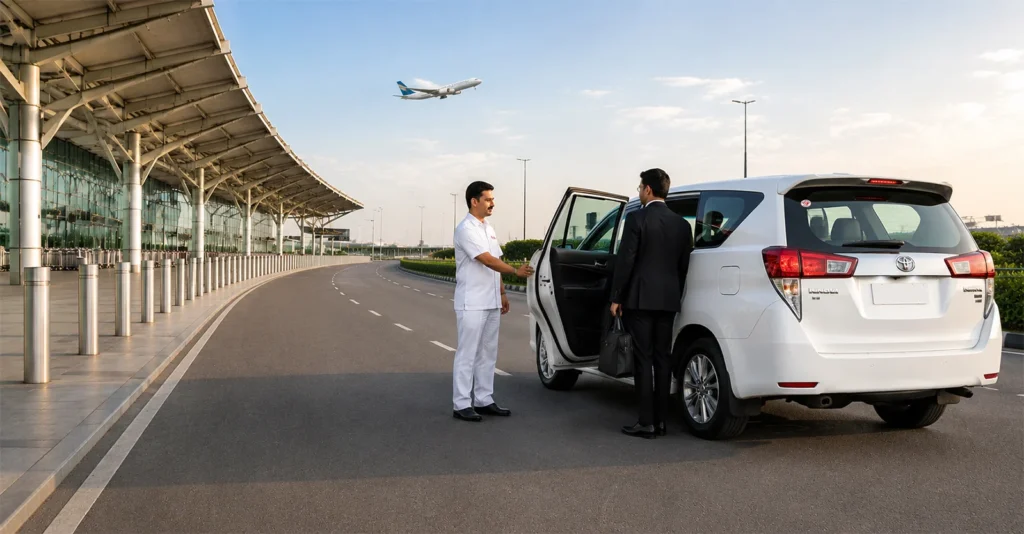
Most people plan their flights with care. They compare fares, check baggage rules, select seats and track timings closely. Yet the part of the journey that often creates the most uncertainty is not the flight itself. It is the journey to and from the airport.  That short stretch between the terminal and your destination carries more variables than expected. Traffic conditions change without warning. Ride availability fluctuates. Prices shift depending on demand. After a long flight, even a small delay can feel heavier than it should. In many ways, this final leg decides whether the overall journey feels smooth or unnecessarily strained.  Why Airport Travel in India Often Feels Unpredictable  In India, this becomes even more noticeable. Airports are busy, cities are dense and travel patterns vary widely depending on the time of day. It is not uncommon to land late at night and find limited transport options, or to arrive during peak hours when demand outpaces supply. For travellers unfamiliar with the city, even simple decisions such as choosing the right pickup point or communicating with a driver can take time.  What an Airport Transfer Service Actually Changes  This is where the idea of a pre-arranged airport transfer becomes relevant. Not as a luxury, but as a way to reduce uncertainty at a very specific moment in the journey.  A pre-booked airport transfer changes the experience in a simple way. The car is assigned before you arrive. The driver is aware of your flight details. The route is already planned. Instead of opening multiple apps or negotiating with local taxis, you step out of the terminal and move towards a ride that is already prepared for you. It removes the need to make decisions when you are least inclined to make them.  For departures, the advantage is just as clear. The pickup time is fixed with a buffer for traffic. The driver arrives knowing the route and the schedule. You do not have to factor in last-minute delays or cancellations. The journey becomes predictable, which is often what travellers value most.  Airport Transfer Costs in India: What You Are Really Paying For  One of the most frequently asked questions about airport transfer services in India is the pricing. Many people believe that pre-booked services are much more expensive. In truth, the distinction is more about how the pricing is organised than the amount itself.  Typically, airport transfer prices include a basic charge based on distance and projected journey time. In addition, airport entry or parking fees may apply, as is the case in most places. Waiting time is another consideration, particularly for arrivals. Some services have a set waiting period, but others charge beyond a specified limit. Night travel might also affect pricing, depending on the service.  Vehicle categorisation is also important. A regular sedan will be less expensive than an SUV or a luxury vehicle. The option is based on the number of passengers, the amount of luggage, and the level of comfort desired.  The main distinction between ride-hailing platforms is predictability. App-based rides frequently use dynamic pricing. Fares might rise dramatically at peak hours, poor weather, or late-night demand. Local taxis may give fixed rates, however they can change depending on negotiation or availability. Pre-arranged airport transfers, on the other hand, typically provide a clear, all-inclusive charge at the time of booking. This helps travellers to make plans without worrying about the final expense.  When Should You Book an Airport Transfer Service  An airport transfer is not necessary for every situation. Its value becomes clearer in certain scenarios.  Early morning and late-night flights are one such case. Availability of transport can be inconsistent during these hours and reliability becomes more important than cost differences. Travelling with family or heavy luggage is another. Space, assistance and ease of movement matter more when you are carrying more than just a cabin bag. Business travel is also a strong use case, where time is closely managed and delays can affect schedules beyond the journey itself. For first-time visitors to a city, a pre-booked transfer provides a structured start, removing the need to navigate unfamiliar systems immediately after arrival.  Practical Tips for Booking an Airport Transfer in India  If you’re thinking about reserving an airport transfer service, a few precautions will help make the process more reliable.  Begin with flight tracking. A competent provider tracks your flight in real time and adjusts the pickup time accordingly. This is especially useful for arrivals, as delays are usual. Next, comprehend the waiting policy. Knowing how long the driver will wait without charging additional fees will help you avoid confusion at the airport.  Driver and vehicle information should be shared in advance. This improves clarity and makes it easier to find your transportation. It is also important to study the cancellation policy, especially if your vacation plans are liable to change. Finally, make sure the pricing is transparent. A clear breakdown without hidden additions is often a sign of a well-structured service.  Choosing a Reliable Airport Transfer Service in India  Car rental companies like Autoriders are built around these principles. The emphasis is on consistency rather than diversity. Drivers are allocated in advance, vehicles are maintained to a specified standard, and journeys are tracked via GPS. Pricing is disclosed upfront, eliminating confusion at the time of payment. Support is offered throughout the booking and travel process, allowing for alterations as plans change.  The goal is not to revolutionise the way people travel, but to make a certain portion of the route more reliable. When the transition from the airport to the city is managed with care, the rest of the travel experience becomes more relaxed.  Final Thoughts  Airport travel is not only about reaching a destination. It is about how smoothly you move through each stage of the journey. Flights are scheduled and structured by design. The road between the airport and your destination is where variability enters.  Planning that segment with a little more attention can change the tone of the entire trip. It allows you to arrive or depart with a sense of order, rather than urgency. In a country where travel is dynamic and often unpredictable, that sense of control is not a small advantage.  FAQ  How much does an airport transfer service cost in India? There is no single fixed price, but the structure is fairly consistent. You are paying for distance, time, and the type of car you choose. A sedan will

Scroll to Top