Delhi does not wake up gently.
It announces itself. A conch shell floats out of a nearby temple. A pressure cooker answers from a kitchen in Lajpat Nagar. The streets fill before the sun is fully up. Auto horns negotiate space with buses. Morning walkers weave around stray dogs who believe the pavement belongs to them. Somewhere between a tea stall and a traffic signal that refuses to change, the city finds its rhythm.
If you live here, you know this rhythm well. Delhi rewards preparation and punishes assumption. You can plan your day carefully and still arrive late because a VIP convoy appears or a wedding procession decides the road is now a celebration venue. This is not a disorder. This is Delhi being Delhi.
Most days, you manage it just fine.
When Business Travel Becomes a Mental Sport
Now imagine it is a regular Tuesday.
You are an Assistant Manager in a growing company. Your routine is familiar. Home to office. Office to home. Your workday is demanding, but predictable. You know how to navigate the city without letting it get to you.
Today is slightly different.
There is a meeting that needs you there in person. A client conversation where presence matters. Not a full-day city tour. Just one important appointment, followed by office hours and a flight later in the evening. Nothing dramatic. Nothing unreasonable.
On paper, it is a straightforward plan.
You leave early, because experience has taught you that Delhi does not reward optimism. A few kilometres in, the city gently reminds you why. Traffic thickens without warning. Lanes lose meaning. A signal stretches longer than expected. Somewhere ahead, something has slowed everything down.
You check the time. Then you check it again.
Your mind, usually focused on work, starts doing small, irritating calculations. How late is acceptable. Whether this delay will affect the meeting. How the rest of the day might shift because of this one stretch of road. The journey starts occupying mental space before the meeting even begins.
And that is when it becomes clear.
The challenge is not the distance.
It is the mental tax the journey demands before the work even starts.
Why Certain Days Require a Different Approach to Travel
At this level, travel time is not idle time.
It is where you review notes before a client conversation. Where are you preparing the talking points? Where you make a few calls before stepping into a room where impressions matter. When that time is spent managing traffic, something subtle but important is lost.
It is not about discomfort.
It is about arriving slightly scattered instead of composed.
Now, picture the same day, handled differently.
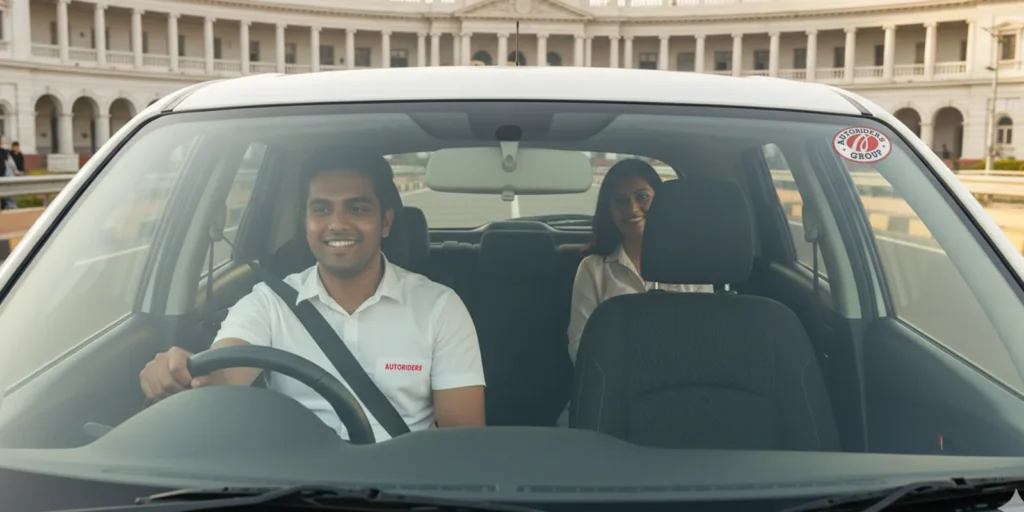
You still leave early. Delhi still sounds the same. The roads are no less unpredictable. What changes in your role during the journey? You are not watching the traffic inch forward. You are reviewing what you need to say. Calls happen without interruption. Notes get read properly. The meeting forms in your mind before you reach the door. The city moves around you, not through you.
When Chauffeur Driven Travel Becomes a Practical Choice
This is where chauffeur-driven travel stops being about comfort and starts being about intent.
In Delhi, local understanding matters. A professional driver does more than follow directions. He reads the city. He senses when a route is about to tighten. He knows which road looks clear now but will collapse in ten minutes. This kind of judgment does not always come from an app, but it shows in how calmly you arrive.
For someone representing their company, this matters. Whether you are meeting a client, accompanying a senior or stepping into a discussion where first impressions count, arriving composed changes how the conversation begins.
The car becomes a quiet buffer between the city and the workday, not a distraction from it.
Choosing Structure Over Stress on High-Stakes Days
Most professionals realise this during specific moments. The first major client meeting. A day when multiple things are lined up and timing matters. When you are not just attending a meeting, but representing your team or your company.
This is when structured options like car rental in Delhi make sense, not as indulgence, but as planning. As a deliberate choice to remove uncertainty from a day where performance matters.
The biggest advantage is how subtle it feels. The journey fades into the background. The focus shifts back to the work. Meetings feel less rushed. Transitions feel smoother. Even long days feel more manageable when your mind is not constantly bracing for the next stretch of traffic.
Letting Delhi Be Delhi Without Letting It Drain You
Delhi will always test patience. It will always rewrite plans. It will always remind you that control is limited on its roads. The city is not going to slow down for anyone.
The smartest professionals learn something else instead. They learn to move through it without friction. To respect its tempo without surrendering their mental space to it.
Managing business travel in Delhi is not about avoiding traffic.
It is about choosing when to take the pressure off yourself.
And on days when the stakes are higher than usual, that choice quietly shapes how the rest of the day unfolds.